NUSID
Digital Sound Desk for DJs (2003)A complete hardware and software system for live music "production." The foundational NUSID project that questioned the traditional boundaries between DJing and creating music.
The Origin
In the 90s, the Commodore Amiga opened the door to the VJ (Video Jockey) world: generating visuals in real time to accompany electronic music sessions. The problem was obvious — synchronizing digital video with DJs spinning vinyl was a technical nightmare. There was no standard protocol, everything was out of sync.
At the same time, Ibiza and BCN immersed me in the electronic sound culture from within: seeing how a set was built and understanding the dynamics between the DJ and the dance floor. In Girona, direct contact with music producers allowed me to know firsthand the limitations of the equipment of the time.
The solution was not to adapt to existing tools, but to build new ones.
The Music Engine
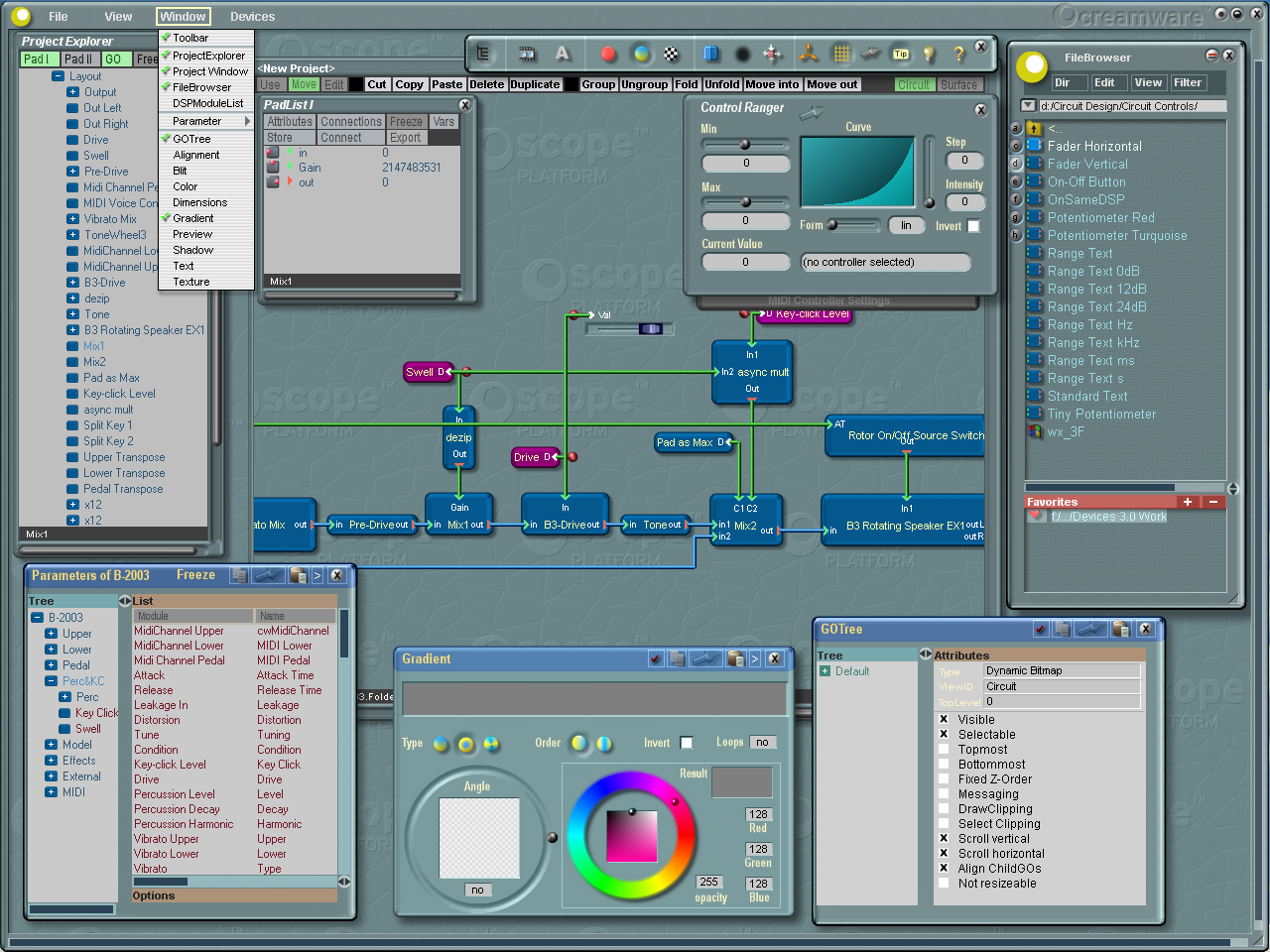
Twelve simultaneous audio channels: four main tracks, two secondary tracks, and six dedicated exclusively to loops —musical fragments of one or several bars playing in a continuous loop. Everything automatically synchronized by beat and bar under a variable master tempo, without altering the original pitch (timestretch).
Each track could be edited in real time while playing: cutting, reordering sections, moving playback forward or backward by jumping whole bars. If the jump was made mid-bar, the system automatically played the fragment of the new position exactly from the same point within the previous bar — guaranteeing a coherent musical transition without interruptions.
Two independent, fully programmable effect modules synchronized with the master tempo could be freely assigned to any track, loop, crossfader, or final output. The effects knew at all times the exact position within the bar, allowing actions like applying a filter exclusively to the start of each bass drum beat.
Architecture and Engineering
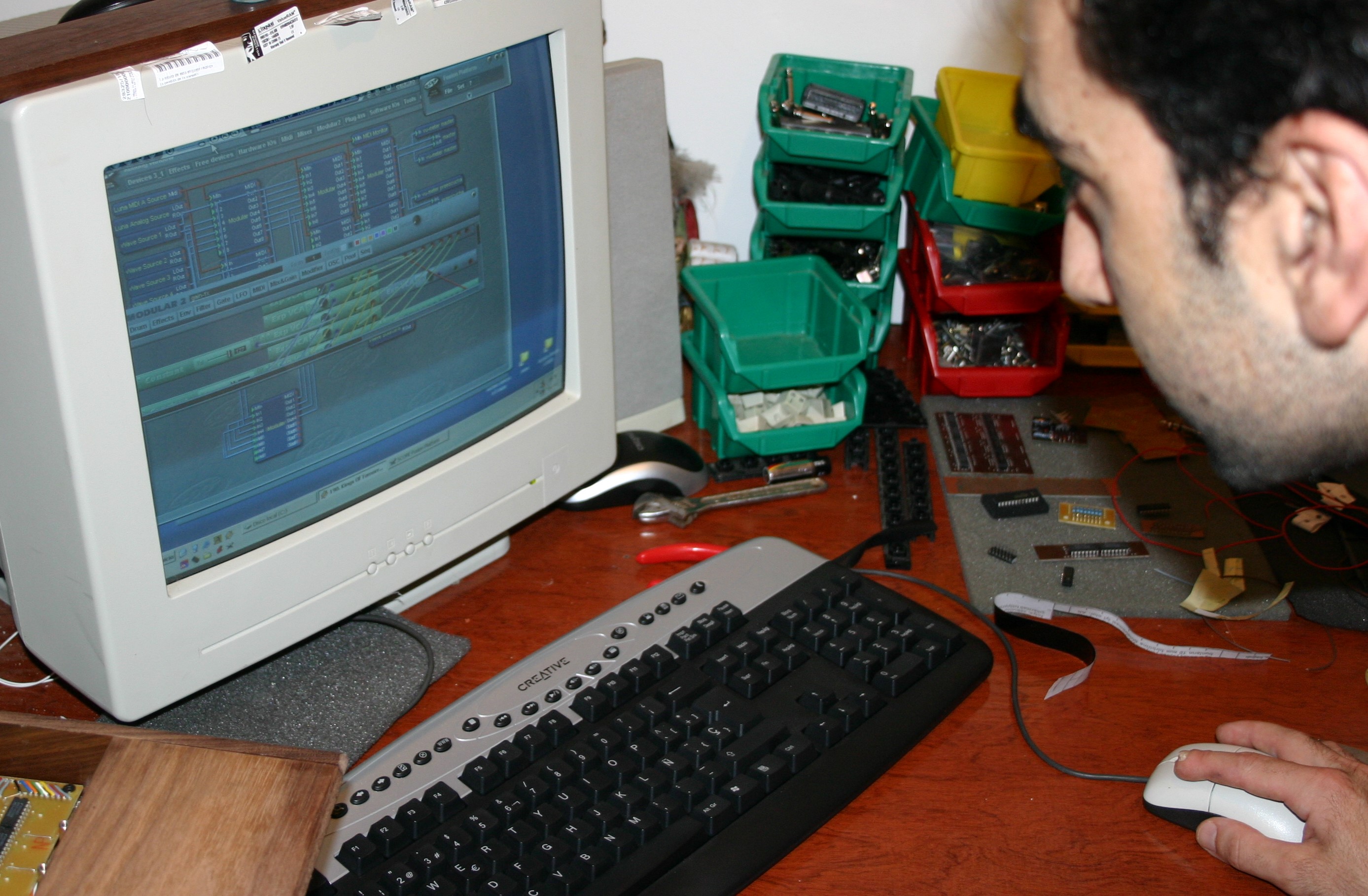
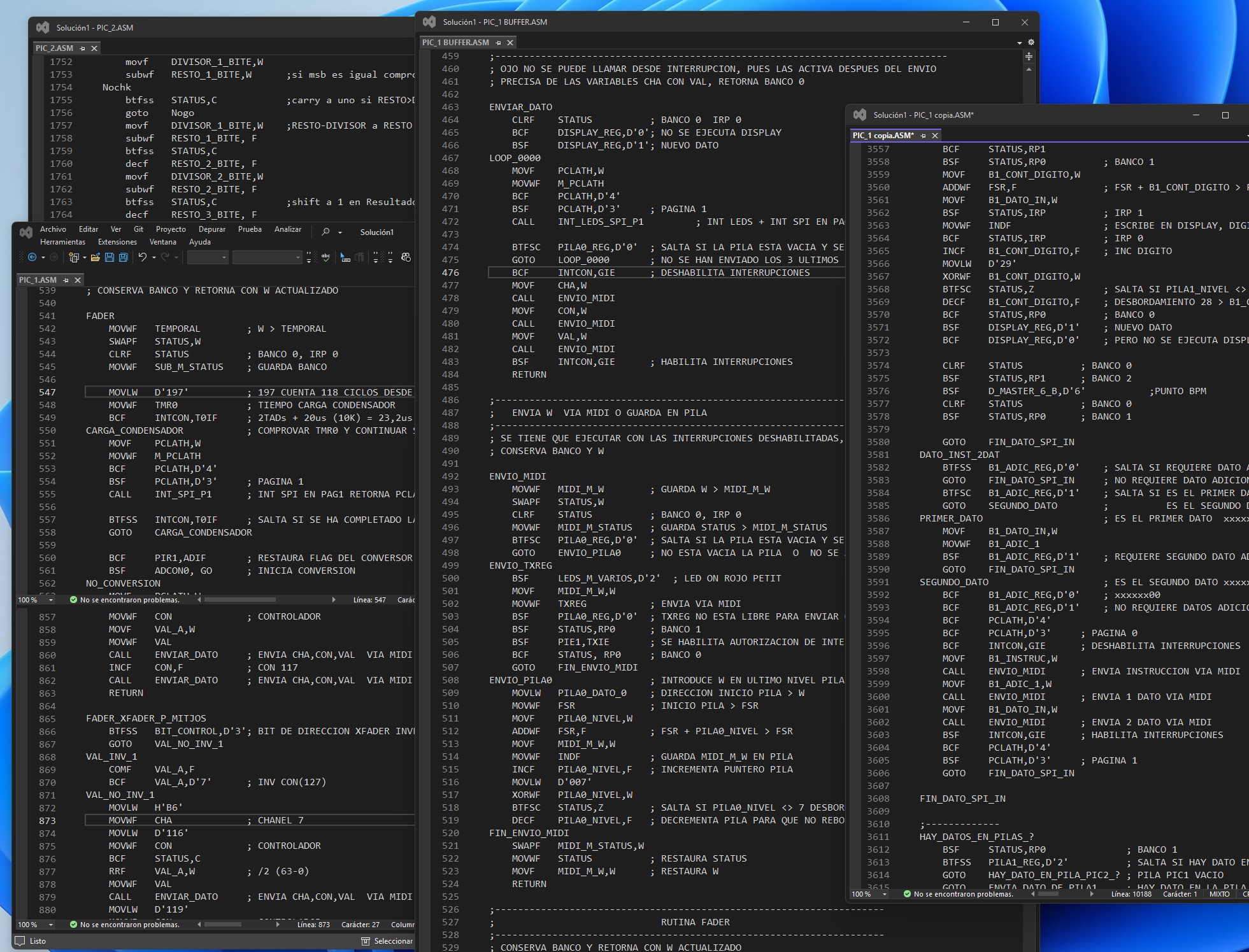
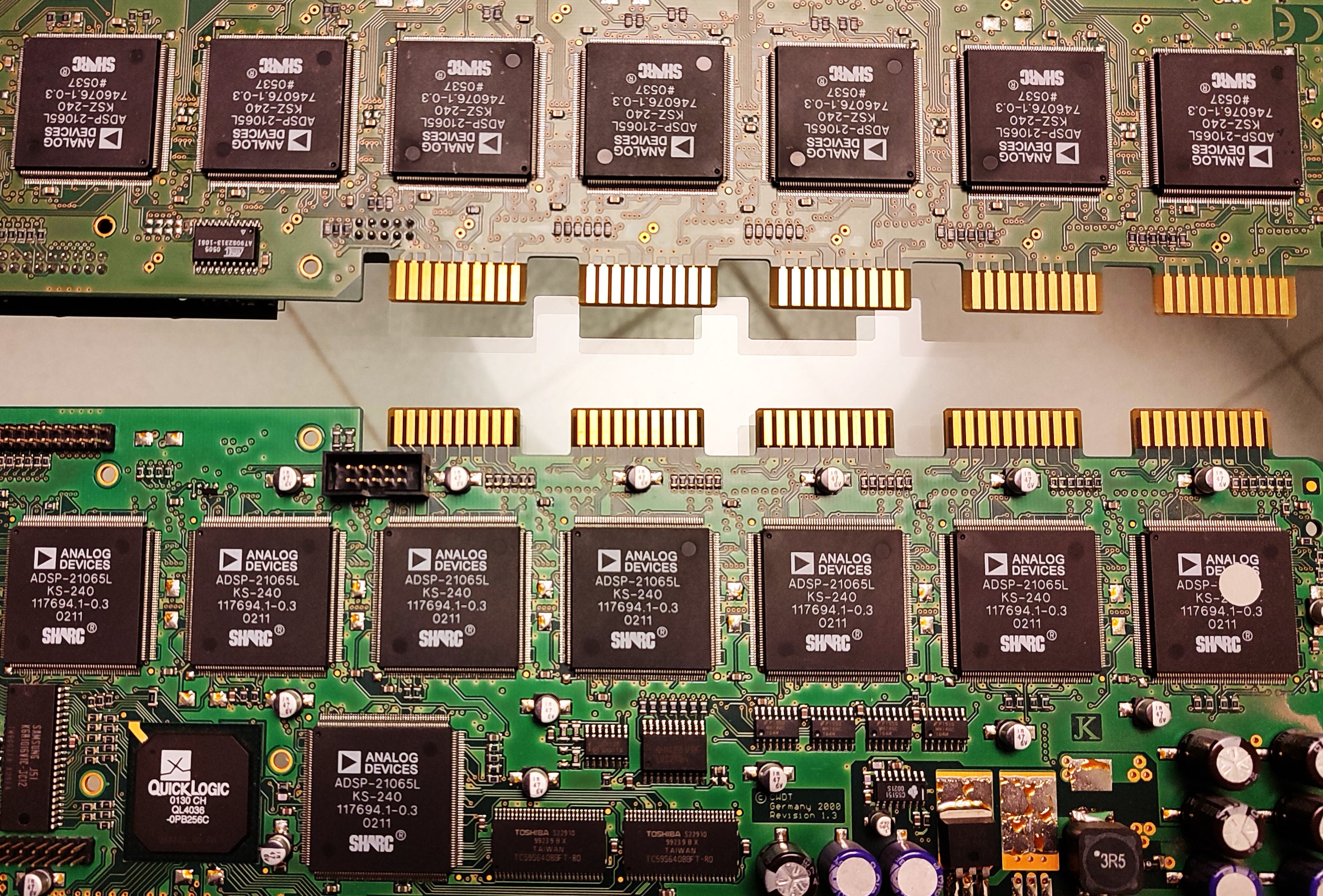
Extreme hardware: Internal computer accompanied by multiple DSPs and microcontrollers. All housed in a metallic chassis and completely water-cooled —including the power supply— to guarantee hours of live performance without overheating inside the extremely "warm" environments of clubs and concert halls.
Examples of functionalities: Smart crossfader programmed through an "equalizer" capable of mixing radically different styles without frequency overlap distortion... MIDI output with Time Code configured especially for computer synchronization and control of digital video switchers (GPI port).
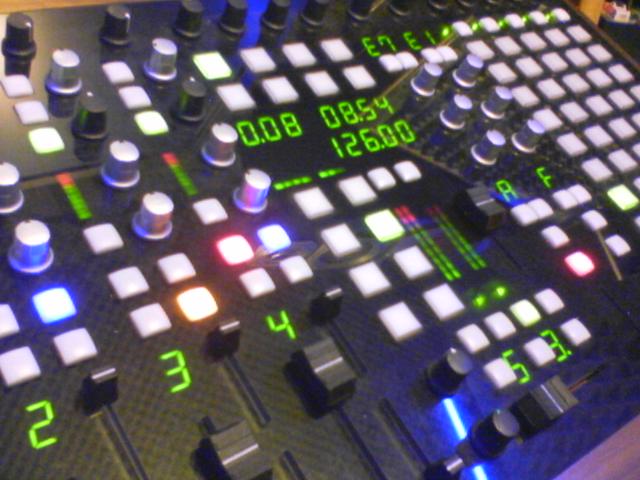
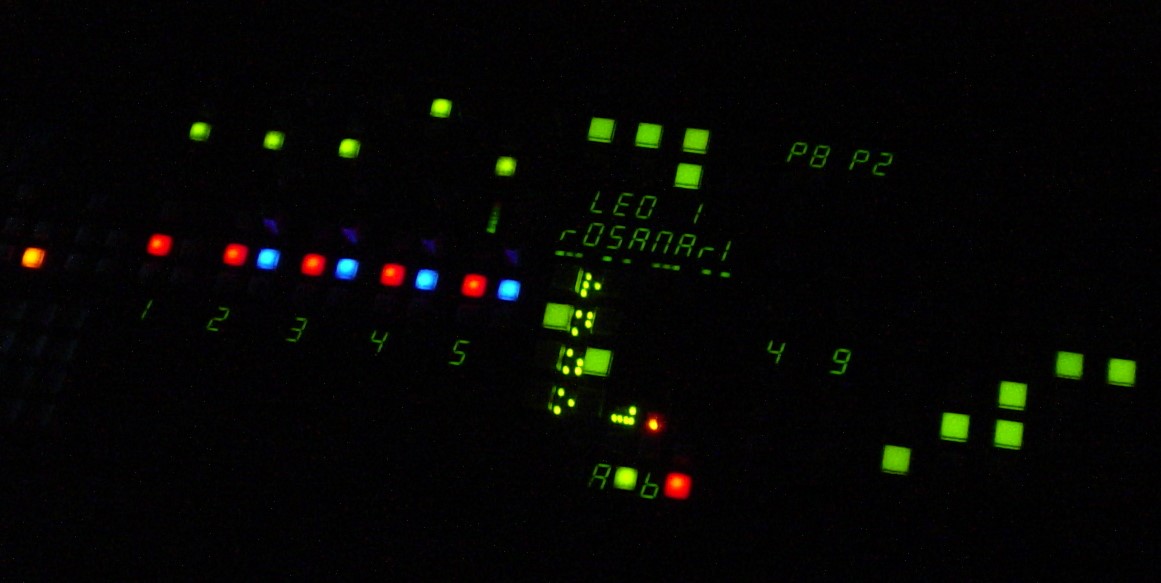
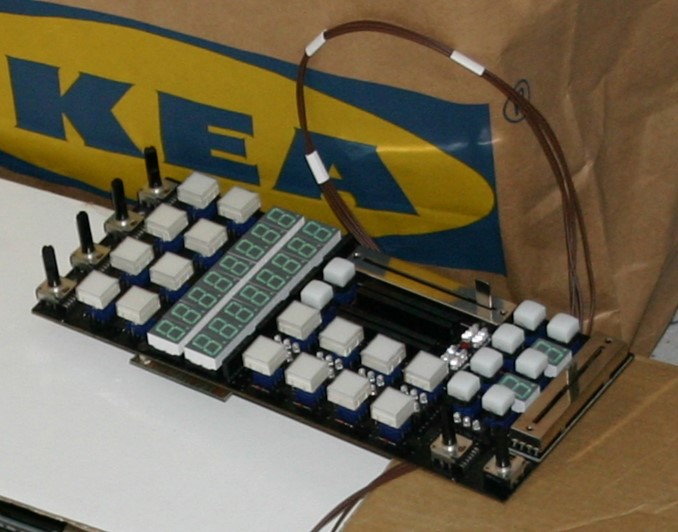
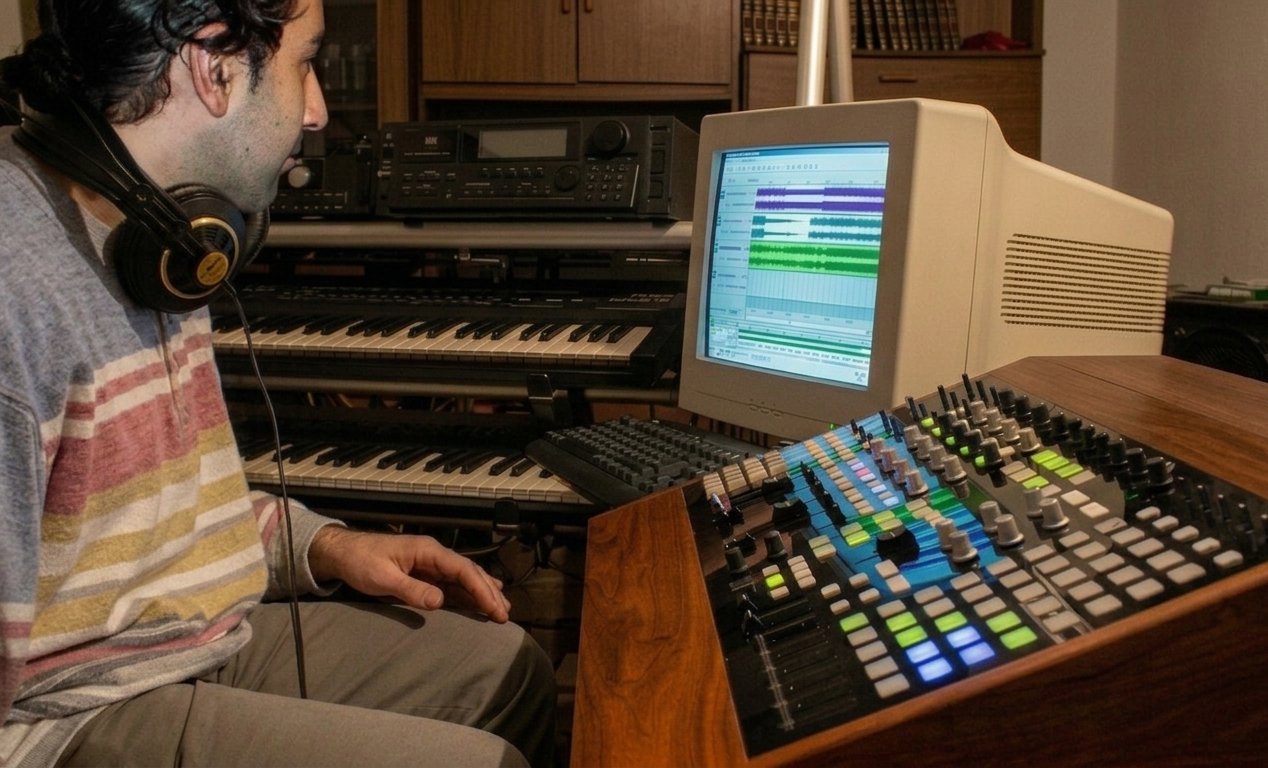
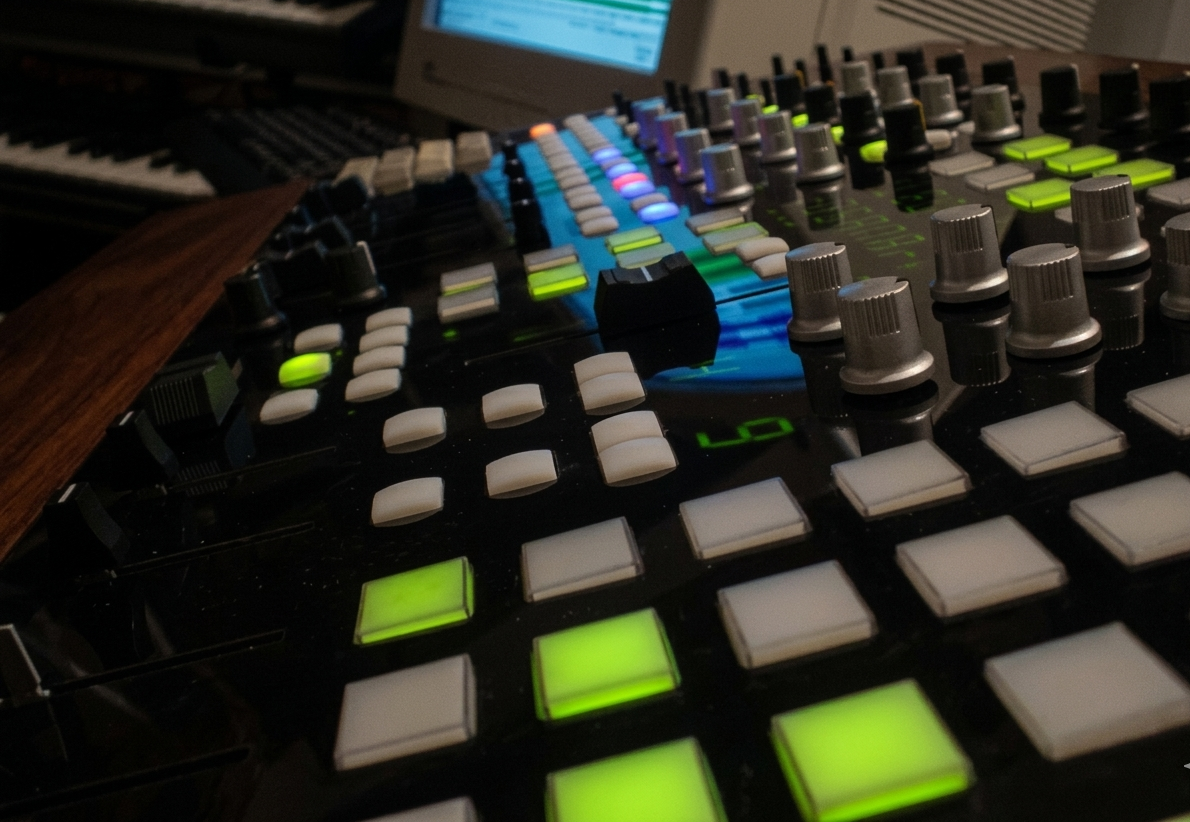
Physical design: Built from scratch with a retro-futuristic design using segment displays, semi-transparent plexiglass, and noble wood finishes.
Recovered Archive
This is how the concept of New mUSIc Design was described and justified in the original communications over twenty years ago:
Intro sessions
Text recited in "spoken word" format live over a House music break when starting the set: